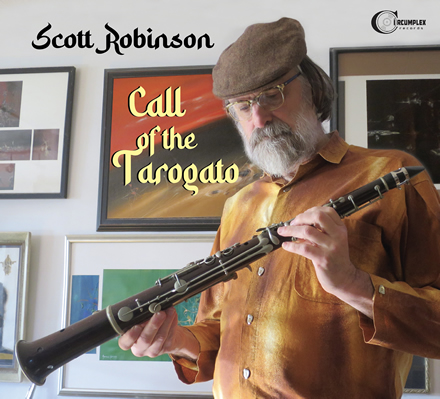
 Call of the Tarogato

Please note: Delivery times vary, due to our unpredictable touring schedule. Please allow up to five weeks for delivery, although most shipments will require far less. If your need is urgent, please advise when placing your order. Thank you!

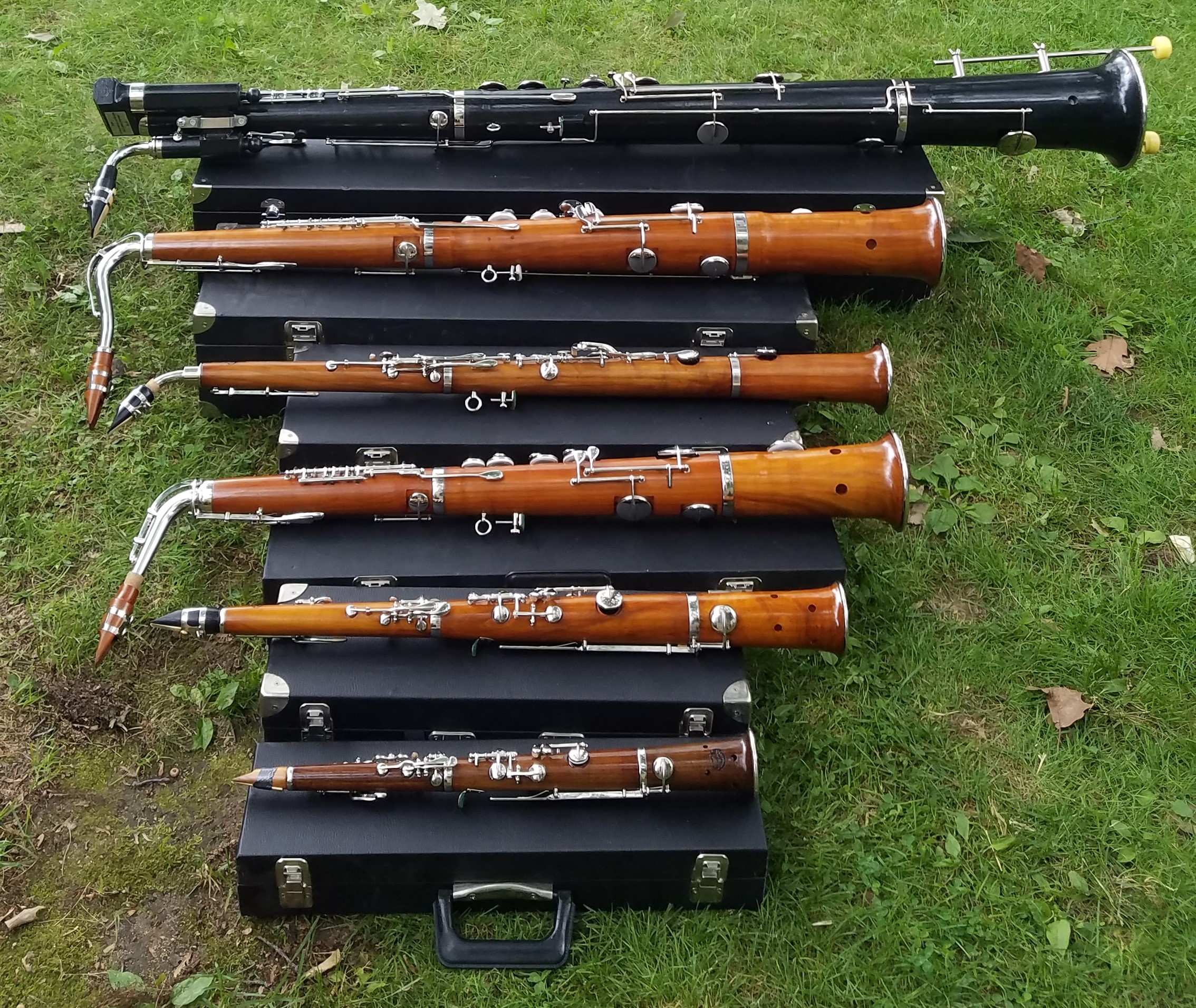
I have been hearing a hívás (the call) of the tarogato for about 20 years, since it was introduced to me by Joe Muranyi, Hungarian-American clarinetist with Louis Armstrong’s last band. His instruments now live with me; his prized vintage Stowassers can be heard on tracks 4, 8 and 12 of this album. The other instruments featured here, all built by the amazing Gregus Pal (Palibácsi, as he is known to his many friends), cover the entire spectrum from sopranino to contrabass. Some are historical reproductions, others he built for the very first time at my urging.
It is said that the soul of the tarogato player lives on in their instrument. Certainly the souls of these two remarkable men will forever reside in these beautiful creations.
The tarogato is a very distinctive Hungarian instrument, one with a long and noble history, inextricably bound with the many tribulations and oppressions the Hungarian people have endured through the centuries. It was brought to its current, single-reed form in the late 1800s. Neither clarinet nor saxophone, it has some of the properties of both… but with a somewhat more primitive mechanism, presenting the player with certain challenges in facility and intonation. (While more modernized versions are being made today, I have chosen to stick with the traditional form.) Interest in the instrument has surged in recent years, largely due to the untiring efforts of Nagy Csaba of the Rákóczi Tárogató Association.
My musical life has become deeply entwined with the remarkably expressive voice of this instrument, and I am most grateful for the warm acceptance I have felt from the Hungarian tarogato community. I have heard the call of the tarogato… and this album represents my first attempt to answer that call in tangible form. I dedicate it with love and admiration to Joe Muranyi, Gregus Pal, and Nagy Csaba. – Scott Robinson, Thanksgiving Day 2025